Monopoly GO has taken the mobile gaming world by storm, and by 2026, it’s still one of the most downloaded casual games on both iOS and Android. While the core loop of rolling dice, building landmarks, and collecting stickers remains familiar to fans of the classic board game, Scopely added a twist that keeps things spicy: competitive minigames. Among these, the Bank Heist stands out as a heart-pumping way to turn a rival’s rainy day into your personal payday. Whether you’re a seasoned tycoon or a newcomer eying that pile of cash, understanding every nook and cranny of this feature can give you a serious edge.
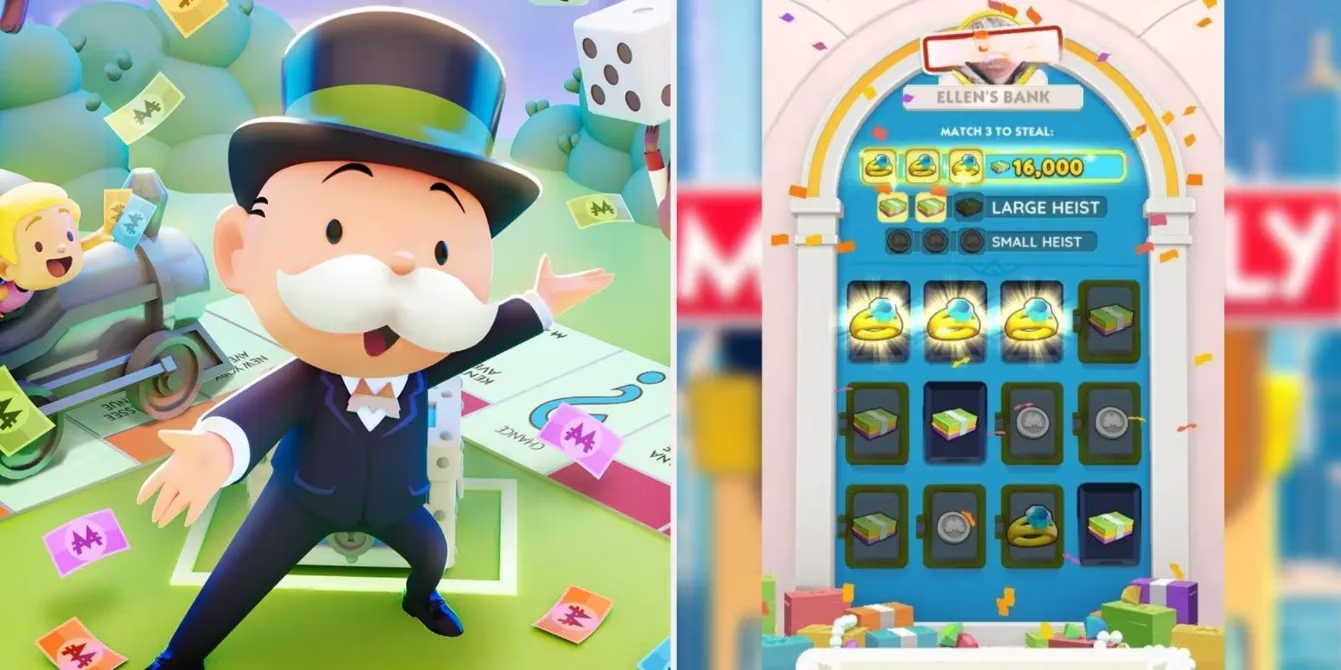
Triggering a Bank Heist isn’t something players can simply will into existence. It all starts with the Railroad squares. Every Monopoly GO board features four of these – if you’ve zipped around a few times, you’ve definitely seen them. Landing on any Railroad tile is the magic moment that kicks off a random drawing between two minigames: the Bank Heist or the Shutdown. There’s no pattern, no secret trick to force one over the other; it’s purely a coin toss. That randomness can be frustrating when you really need a cash injection, but it also makes each Railroad landing a tiny burst of suspense.
Now, suppose the dice gods smile and the Bank Heist loads up. What greets the player is a screen showing 12 metal doors, each concealing one of three possible treasures. The minigame’s charm lies in its simplicity: you just tap on doors, one after another, until you’ve revealed three matching symbols. But don’t let that simplicity fool you – every tap feels like cracking a safe, especially when a big score is on the line. Behind the doors, players will find either a silver coin, a cash bundle (a stack of bills tied with a band), or a diamond ring. The goal is to hunt for three of a kind. The moment that third identical item flips, the heist is complete and the stolen amount flashes onto the screen. If you’ve ever watched a slot machine align, you’ll grasp the addictive rhythm instantly.
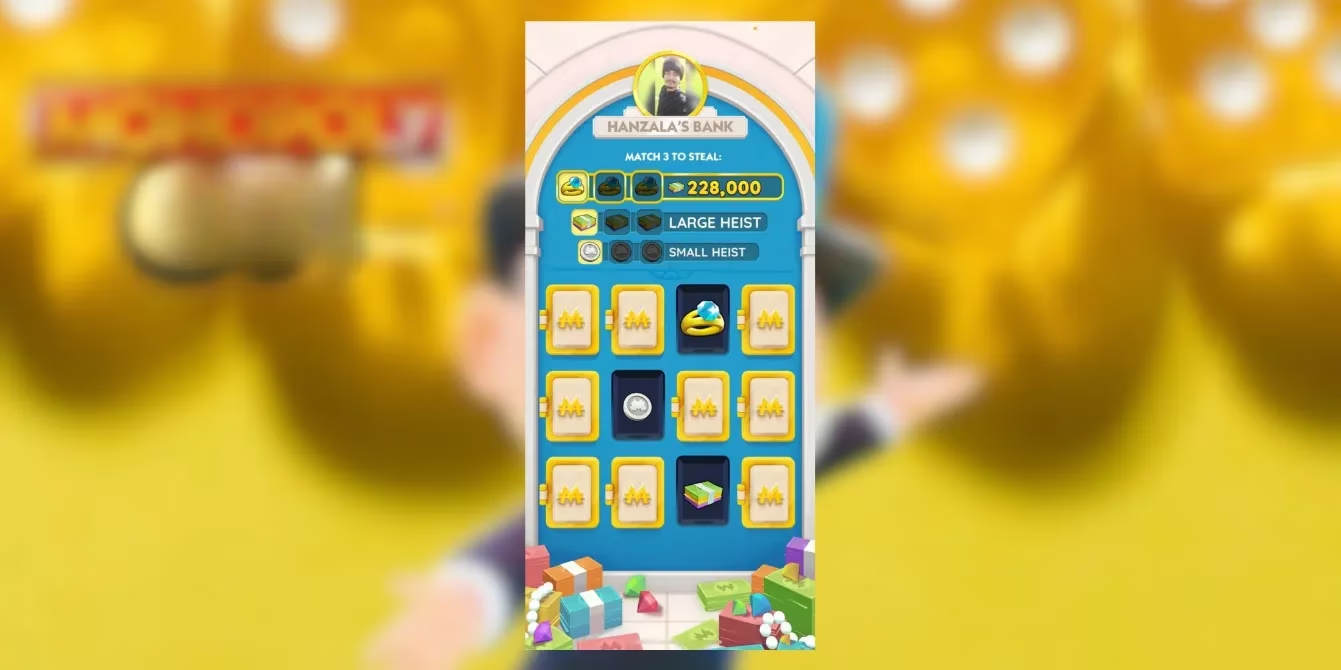
What really separates a lucky amateur from a calculated high-roller, however, is knowing the three tiers of heists and how they scale. The items matched directly determine the payout bracket:
-
🪙 Three Silver Coins → Small Heist. You’ll pocket a modest sum, often enough to finish a landmark upgrade or two but nothing life‑changing.
-
💵 Three Cash Bundles → Large Heist. This one hits harder, stripping a significant chunk from the victim’s bank. It’s the kind of score that makes you want to high‑five your screen.
-
💍 Three Diamond Rings → Bankrupt Heist. The crown jewel. This triggers the maximum possible theft, leaving the opponent’s virtual vault practically weeping. If you manage this against a high‑net‑worth player, it can fund an entire board’s worth of improvements.
Because the heist amount is a percentage of the target’s current balance, the richer your opponent, the more you stand to gain. That dynamic shifts every session; playing late at night when wallets are fat can be far more rewarding than during peak hours when everyone spends freely. Many savvy players in 2026 keep an eye on their friends list, noting who’s likely to be hoarding cash for a big upgrade spree, and cross their fingers for a Railroad landing on those specific boards.
Now – and this is crucial – unlike the Shutdown minigame, where shields can protect landmarks from damage, there is absolutely no shield for your bank. None. Zip. If an opponent lands a Bankrupt Heist on you, the money vanishes immediately. This vulnerability creates a fascinating risk-reward layer. Do you keep a fat balance to afford that next expensive hotel, or do you burn it all on upgrades and sticker packs before someone swipes it? Veteran players have learned the hard way: the only true defense is a zero balance. Before you log off for the night, drain every last coin. While you’re actively playing, your bank is safe – the game doesn’t allow heists against online users – but the moment you close the app, you’re fair game. Setting a mental timer to spend down before a break is now a common ritual in Monopoly GO groups.
Another tool in the burglar’s kit is the dice multiplier. Activating a ×5, ×10, or even higher multiplier before you roll doesn’t just multiply your earnings from passing GO or landing on certain tiles; it also jacks up the loot from a Bank Heist. If you sense a Railroad square is coming up – perhaps you’re six to eight spaces away and the odds look good – cranking the multiplier can turn a modest theft into a fortune. But there’s a gamble: if you miss the Railroad and land on a tax tile or get sent to Jail, you’ve wasted precious dice. High‑risk, high‑reward thinking is what separates the moguls from the crowd.
The difference between Bank Heist and Shutdown also highlights the game’s design philosophy. Shutdown lets you attack landmarks, but the defender can always rebuild; a Bankrupt Heist, on the other hand, deals a financial blow that can set someone back by hours of passive income. Because of this, some players actually prefer Shutdowns when they’re low on shields, while others curse every Railroad that doesn’t give them a Heist. The community’s banter around these two outcomes is still alive and well in 2026, with meme after meme comparing the disappointment of a Shutdown to the euphoria of three rings.
So what’s the bottom line for a Monopoly GO player who wants to master the Bank Heist? First, never ignore the Railroad – it’s your golden ticket. Second, learn to ride the multiplier; a well‑timed boost can multiply a small heist into a large one in effect, if not in name. Third, protect your own cash by adopting a “spend it or lose it” mentality whenever you’re about to go offline. And lastly, embrace the randomness. The Bank Heist isn’t meant to be a predictable ATM; it’s a thrill that keeps the board game feeling dangerously alive. Whether you’re on the giving or receiving end, that little jolt of adrenaline is what makes Monopoly GO far more than a digital port of a dusty cardboard box.
It’s 2026, and Monopoly GO continues to add new boards, stickers, and events, but the Bank Heist remains a fan‑favorite mechanic. So next time those dice tumble and a Railroad square slides into view, hold your breath – you’re just three matching symbols away from walking out of the bank with a smile.