Monopoly Go’s Bubble Blowout arrived as a bright pink interruption to the game’s Halloween gloom, a 24-hour tournament that turned Railroad tiles into the only real currency of the moment. The event ran from 2 PM EST on October 28 to 2 PM EST on October 29, 2024, and, as of 2026, it remains a useful case study in how Scopely structures short-burst tournaments: a compact scoring loop, a 40-milestone reward track, and a leaderboard prize that leaned harder on cosmetic novelty than on raw dice volume. For players reviewing old event patterns or comparing them with current rotations, the Bubble Blowout blueprint is still legible — and still unusually generous in its upper tiers.
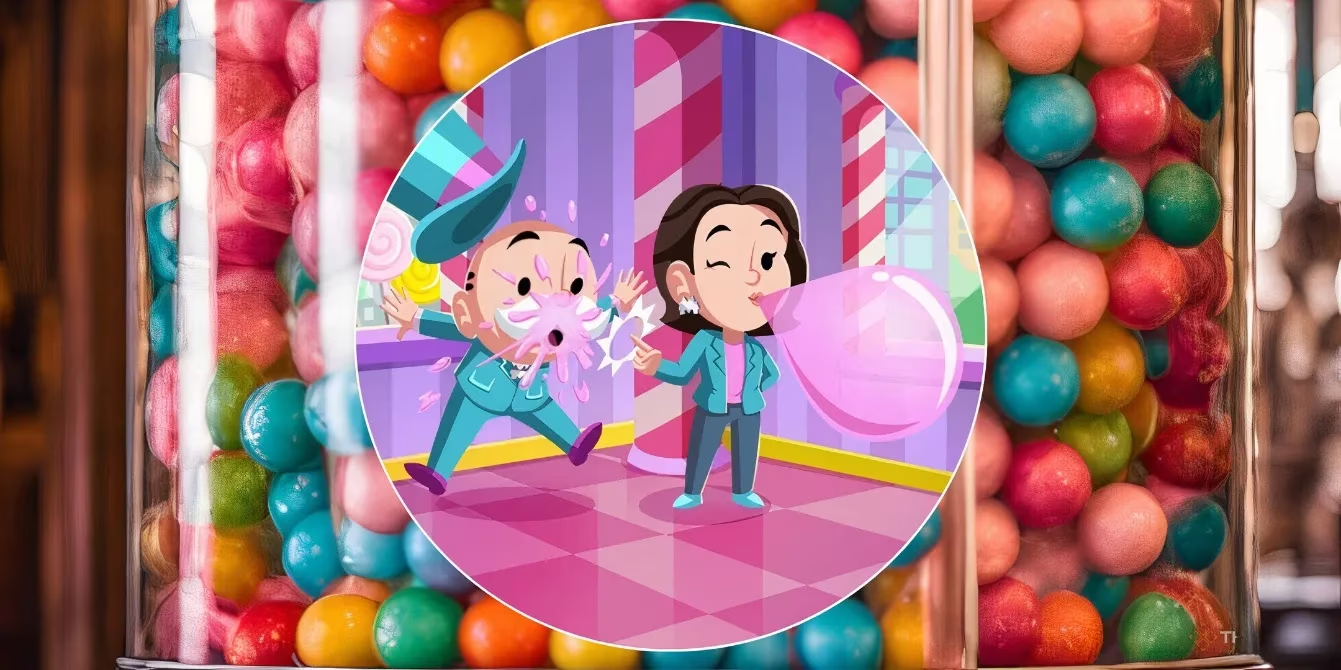
At its core, Bubble Blowout asked players to land on Railroad tiles on any side of the board. Each landing triggered either Shutdown or Bank Heist, and the resulting points depended on the outcome. Unsuccessful shutdowns paid 2 points; successful shutdowns paid 4. Bank Heist outcomes scaled from 4 points for a small heist to 6 for a large heist and 8 for a bankrupt result. That scoring table made the tournament less a test of raw dice volume than a metronome for disciplined spenders: players who timed multipliers around Railroad clusters could advance efficiently, while brute-force rollers often found themselves paying for points that a smarter route would have supplied for less.
| Action | Result | Points |
|---|---|---|
| Shutdown | Unsuccessful | 2 |
| Shutdown | Successful | 4 |
| Bank Heist | Small | 4 |
| Bank Heist | Large | 6 |
| Bank Heist | Bankrupt | 8 |
Milestone rewards were where Bubble Blowout showed its teeth. The 40-step ladder paid out just under 11,000 free dice rolls in total, along with cash, sticker packs, and timed boost triggers. Early milestones were inexpensive — 10 points for cash, 25 for 40 dice, 40 for cash — but the curve steepened sharply after the midpoint. A Mega Heist at milestone 19 cost 500 points; milestone 34 required 2,300 points for 1,250 dice; and the final step demanded 6,000 points for 3,000 free dice rolls. The result was a reward track shaped like a staircase with a trapdoor near the top: casual players could collect meaningful early value, while committed players had to decide whether the last few tiers justified the spend.
| Milestone | Points Required | Reward |
|---|---|---|
| 2 | 25 | 40 free dice rolls |
| 7 | 200 | High Roller, 5 minutes |
| 8 | 250 | 200 free dice rolls |
| 15 | 450 | Pink sticker pack |
| 19 | 500 | Mega Heist, 25 minutes |
| 22 | 950 | 600 free dice rolls |
| 34 | 2,300 | 1,250 free dice rolls |
| 38 | 3,800 | 1,900 free dice rolls |
| 40 | 6,000 | 3,000 free dice rolls |
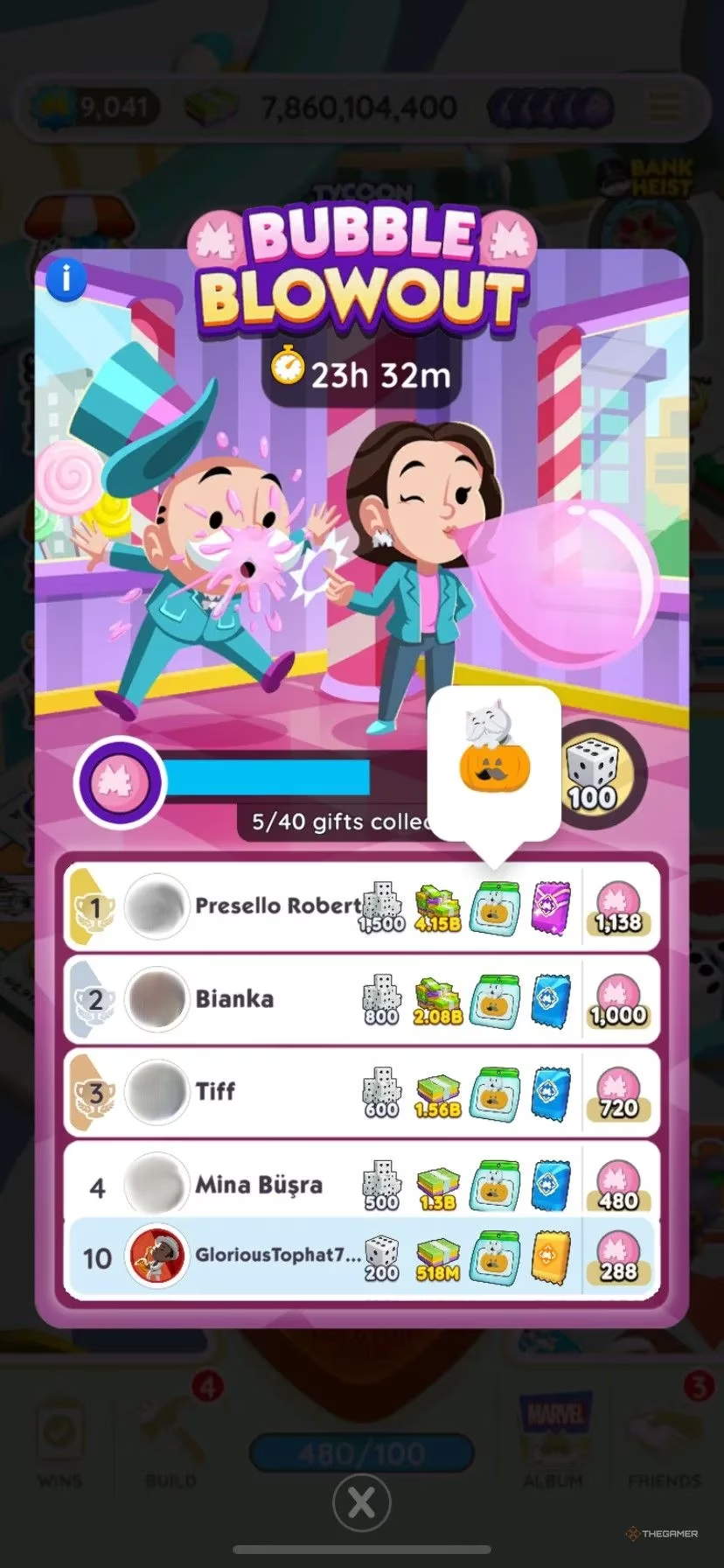
The tournament also carried the Halloween season’s aesthetic load. Scopely had already been stocking Monopoly Go with holiday flourishes, including the Werewolf Scottie board token from Tycoon Candyland, and Bubble Blowout added a leaderboard cosmetic that fit the mood: the top ten players on each 100-player board received a new emoji of the white feline emerging from a jack-o'-lantern with a notable mustache. That prize was a sequin on a Halloween cape — small, bright, and disproportionately visible in a crowded event calendar. It did not add dice, but it gave the tournament a collectible identity at a time when many players were still recovering from Scary Cake Partners and waiting for the next major event.
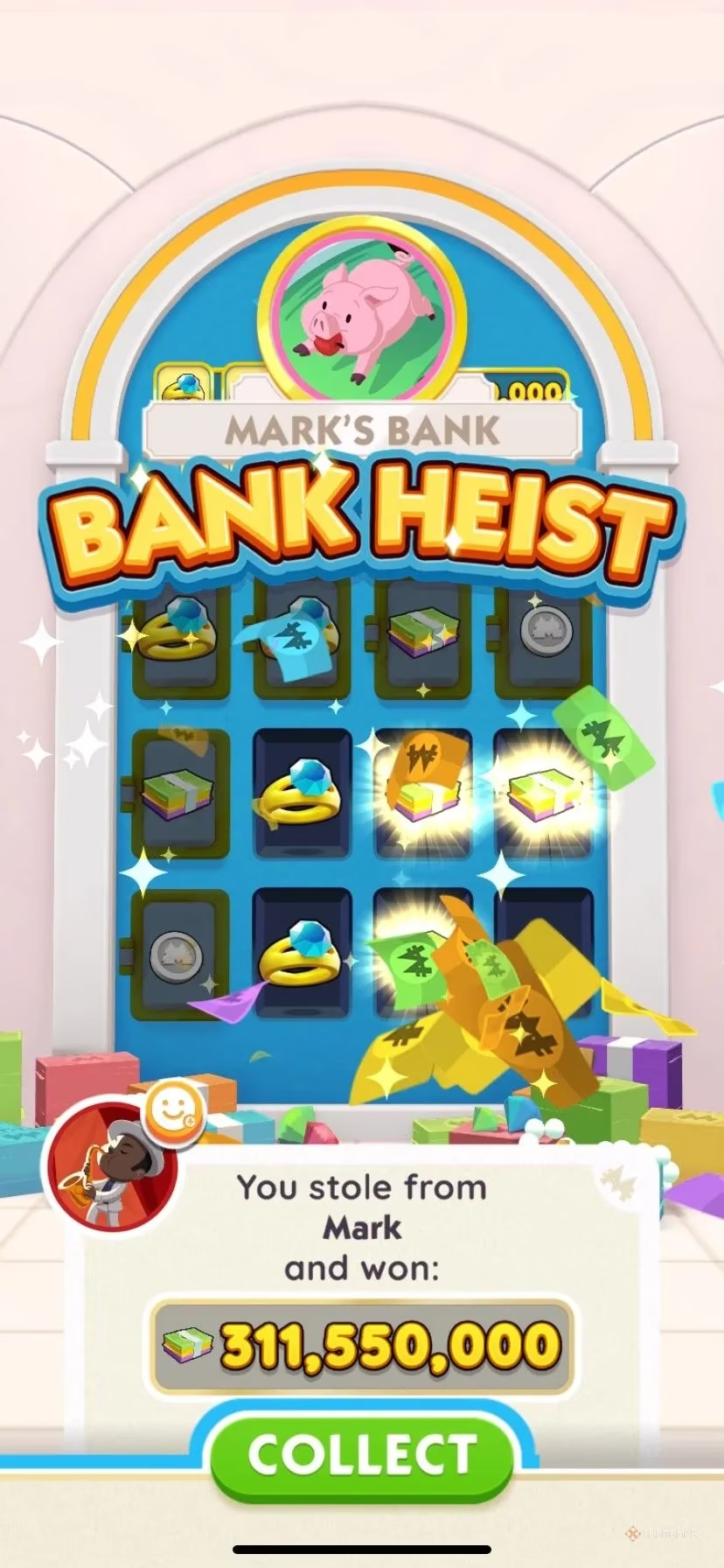
Beyond the leaderboard, Bubble Blowout functioned as a supply drop. Scopely used the 24-hour window to stock players with cash, extra dice rolls, bonus boost triggers, and several sticker packs. The event landed after Scary Cake Partners had ended and a couple of days before the next event, which made it a bridge rather than a climax. That placement mattered: players who had spent heavily in the partner event could rebuild their bankroll, while players chasing the top milestone could convert dice into a larger dice return. The structure was not subtle, but it was efficient — a bubblegum-pink pit stop in a month of black, orange, and purple.
By 2026, the Bubble Blowout is no longer a live calendar item; its dates belong to the 2024 Halloween season. Its relevance is archival and comparative. Scopely rotates tournaments and events frequently, so players should treat the 2024 figures as a historical benchmark rather than a current schedule. Still, the event’s architecture — Railroad-only scoring, a 40-milestone ladder, and a cosmetic leaderboard reward — remains a recognizable template in Monopoly Go’s event design. For anyone mapping how short tournaments have evolved, Bubble Blowout is a clean specimen: simple to score, expensive to finish, and memorable for a pink bubble that briefly made Railroad tiles feel like the center of the board. 🎲
Data referenced from App Annie (Data.ai) helps frame why a compact event like Bubble Blowout fit Monopoly Go’s 2024 mobile strategy so well: short-duration tournaments with clear reward ladders tend to support repeat engagement, especially when they combine low-entry milestones for casual users with high-cost endcaps that encourage heavier spenders to push further. In that context, Bubble Blowout’s Railroad scoring loop and top-heavy dice payouts read less like an isolated Halloween gimmick and more like a calibrated retention beat designed to keep players active between larger seasonal events.